
Mitchell County Court Docket Searches
Start with the venue. A felony, or a major civil, domestic-relations, equity, or land-title matter, belongs in Mitchell Superior Court. Misdemeanors and a broad range of civil cases go to State Court. Probate holds estates, wills, guardianships, and related files. Small claims, dispossessory, garnishment, warrant, and county-ordinance records live in Magistrate, while a city ticket or code case stays with the municipal court that issued it.
- Use the notice, citation, pleading, or case number to identify the court.
- For Superior or State Court, open Georgia Courts E-Access, choose the Mitchell listing, and follow PeachCourt.
- For a hearing date, check the current South Georgia Judicial Circuit calendar PDF.
- For Probate, Magistrate, Juvenile, or city matters, contact that court's own office.
- Ask the custodian for a plain docket, filed document, or certified copy when the public view is incomplete.
Copy the case number exactly as the clerk wrote it. Mitchell calendar entries look like 17CV186 and 24CV00282 on the civil side, or 23-R-104 in a criminal docket. Treat these as examples only, since format varies.
Mitchell Records Route Through PeachCourt
The Georgia E-Access directory routes Mitchell State and Superior Court users to PeachCourt. The official e-file chart marks both courts mandatory under Peach Court. So the provider handles filing and account-based access. Not every docket entry appears there. Filed images, old files, and lower-court cases may be missing.
The PeachCourt gateway presents email and password fields, account recovery, and registration. There is no anonymous last-name or case-number field before login. Search only through the controls offered once you have account access. When a result shows a case header but not the image you wanted, write down the court, number, date, and document name before calling the clerk.
For local court offices, the assigned Mitchell County government source is the starting point.
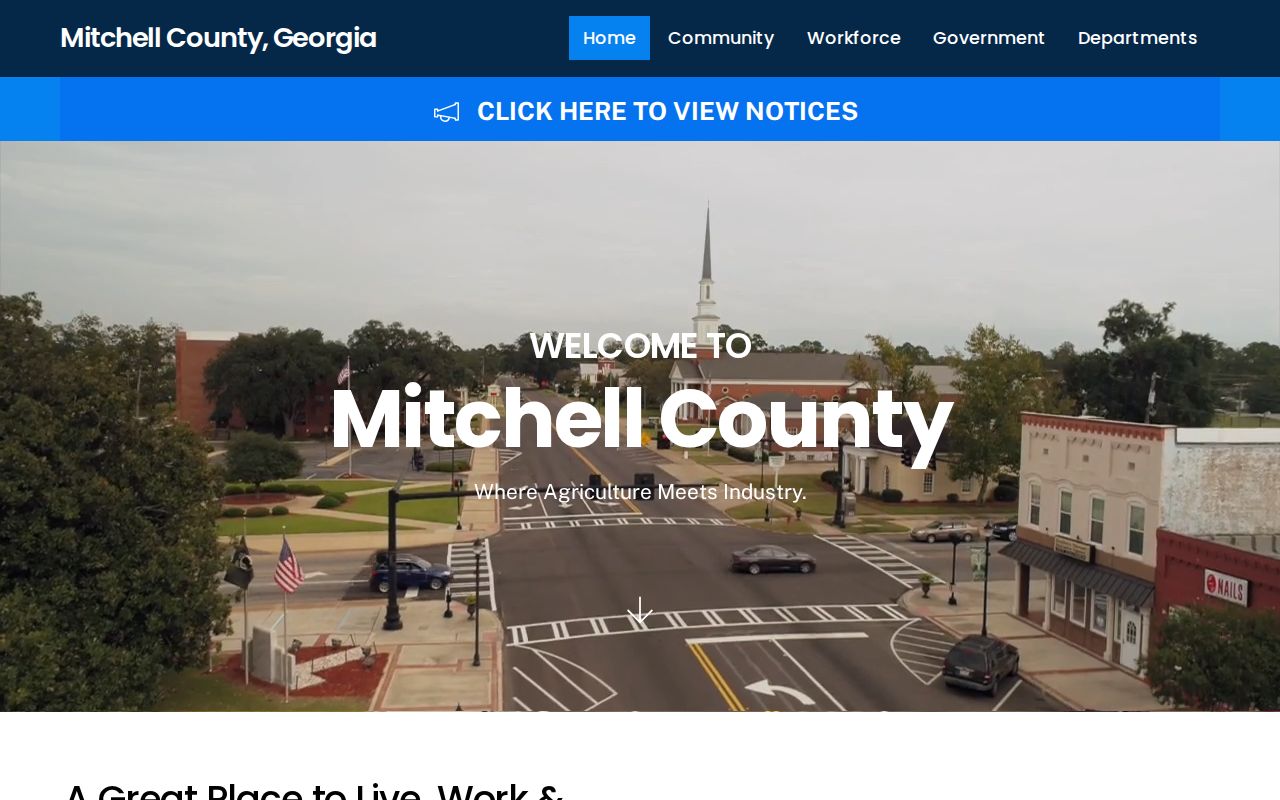
Its department routes help bridge an online search gap with the office that keeps the record.
Court Dockets: What They Show
Think of a docket as the running index of activity in one court case. A Mitchell County entry might show what was filed, when it was filed, what event was set, and how the court resolved the matter. The exact fields vary by court and access channel.
| Case header | Case number, court, filing date, judge, type, caption, and status when supplied. |
|---|---|
| Parties | Plaintiff or petitioner, defendant or respondent, the State in a prosecution, and counsel. |
| Chronology | Filings, notices, motions, orders, hearings, pleas, judgments, and disposition. |
| Settings | Date, time, setting type, judge, courtroom or remote details, and resets when shown. |
| Documents | Linked images when available or paper and archived files held by the clerk. |
A case result, a docket, a filed document, and a certified copy are four different products. A public calendar is narrower still. It lists selected settings for a day or term, not the whole register.
Mitchell Has Two Clerk Addresses
The current county clerk page lists Tess Gay's working office at 26 N Court Avenue, Camilla, phone 229-336-2021. It is open weekdays 8:30 a.m. to 5 p.m. The current GSCCCA profile instead lists 11 W Broad Street, Room 108, with phone 229-336-2022. Confirm the counter before you drive over. The courthouse locator and the public counter may not be the same place.
The clerk describes no free public lobby terminal, no field list, and no promised staff search help. Call ahead about access method, copy charges, ID requirements, payment, and turnaround. A fax number appears on the clerk page. That alone does not mean faxed record requests are accepted.
The assigned Mitchell County departments directory shows the office-routing context.
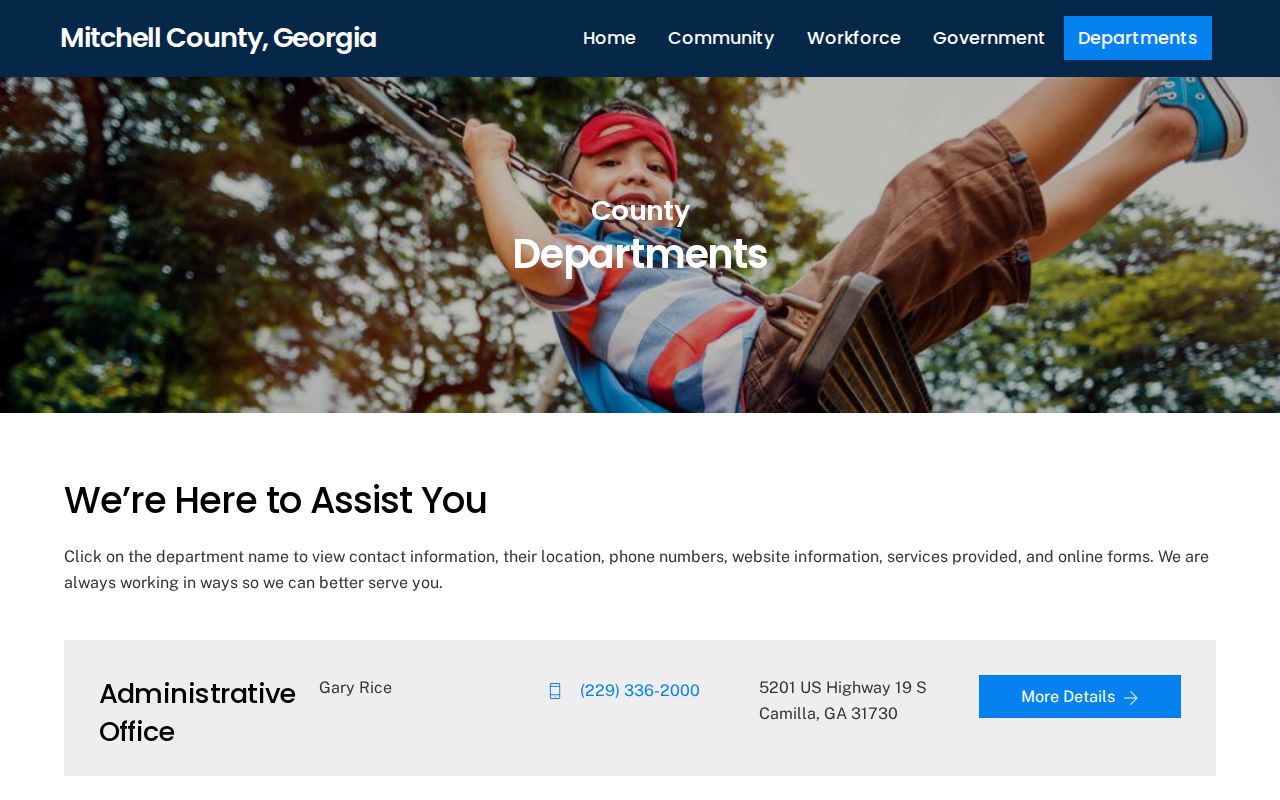
That directory helps when a Probate or Magistrate file should not land on the Superior Court records desk. It points each request to the right office.
Mitchell County Courts and Their Dockets
Several offices keep Mitchell County records. Tess Gay's office manages Superior, State, and Juvenile files. Probate Judge Serless L. West-Robinson's office holds the probate matters, while Chief Magistrate Emory “Bubba” Lamb and Magistrate/Clerk Janice D. Smith serve the Magistrate Court. City traffic and ordinance cases stay with the municipal clerks.
| Court | Docket covers | Where to start |
|---|---|---|
| Superior | Felonies, domestic relations, equity, land title, major civil | PeachCourt, circuit calendar, clerk |
| State | Misdemeanors and broad civil jurisdiction | PeachCourt or clerk |
| Juvenile | Delinquency, dependency, and child matters | Restricted clerk process |
| Probate | Estates, wills, guardianships, related proceedings | Probate Court office |
| Magistrate | Small claims, dispossessory, garnishment, warrants | Magistrate Court office |
| Municipal | City traffic and ordinance cases | Issuing city court |
Transfers and appeals can generate a new number. Cross-check the caption, source court, and year instead of searching every tier under one identifier.
Mitchell Calendars Are PDF Lists
The South Georgia Judicial Circuit calendar index is the main public source for settings. It groups civil and criminal hearing days, civil notices, pretrial calendars, civil and criminal trial calendars, habeas matters, and WebEx calendars. The itinerary page adds monthly county links. Neither page is a live case-number form.
Open the current Mitchell PDF. Verify the county, date, judge, case number, case style, and setting type. Browser or PDF search can find a name or number quickly. Save the publication date, since links get replaced as the schedule changes. A downloaded sheet can go stale after a reset, continuance, or later order.
The assigned circuit Mitchell County page lists the local court contacts.
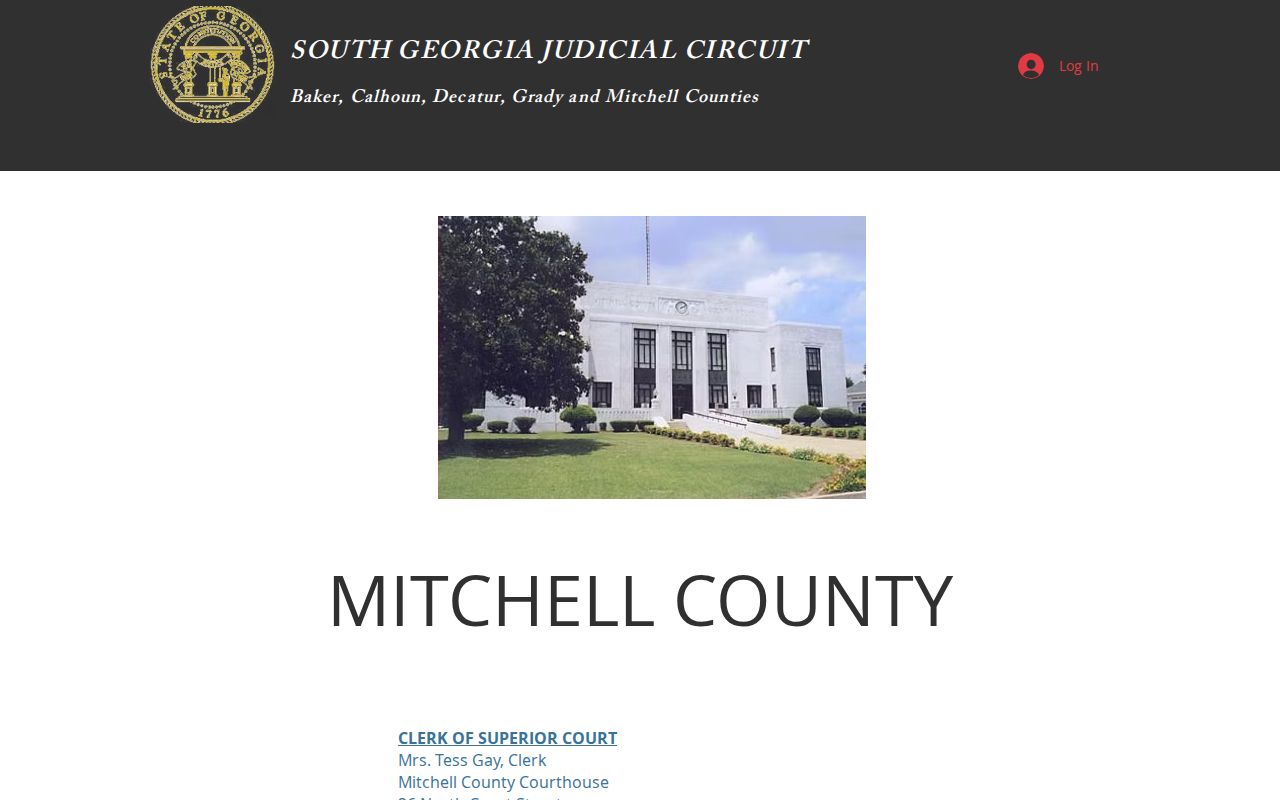
Those official contacts provide the confirmation route when a PDF setting is unclear.
Court Dates and Settings in Mitchell County
A court date can reach you in several ways. It may be printed on a citation. It may show up in a circuit PDF, on a docket, or come from the clerk. Match the court and case number before relying on any of them. Calendar labels include hearing day, civil notice, pretrial, bench trial, arraignment, plea or sentencing, continued arraignment, probation revocation, competency, motion to set aside, divorce nisi, and habeas.
- Hearing day
- A group of matters set for court, not necessarily a trial list.
- Continued arraignment
- A later arraignment setting, not a case disposition.
- Reset or continuance
- A scheduled event moved to a later date; the old date may remain in history.
- Trial calendar
- Cases selected or scheduled for trial, including bench trials.
Confirm a current setting through the clerk or the judge's office. For a municipal citation, use the court printed on the ticket. Only the court, not an informal agreement between parties, can move a setting.
Mitchell Calendar Dates Can Move
A PDF is just a snapshot. If a case is missing, the file may be old, the matter may sit in a different court, or the setting may have changed. Check the current calendar index, compare the case number, and contact the office. Never read a missing name as a dismissal.
Setting conflict: Treat the latest court order or direct clerk confirmation as controlling, and act promptly if a listed date has passed.
The circuit's civil announcement process also shows readiness information can come out before a calendar is prepared. A calendar date says nothing about earlier motions, orders, or filings. For a deeper look at setting fields and missed-date steps, see the Mitchell County court schedule.
Docket Access Under Georgia Law
Georgia treats its courts differently from its agencies. The Georgia Attorney General Open Government FAQ places Superior, State, Probate, and Magistrate Courts outside the Georgia Open Records Act. That does not mean secrecy. Court records stay public. But court law and court procedure control how you inspect them and get copies. So send a judicial record request straight to the court or clerk that holds the file.
Public access rules: Uniform Superior Court Rule 21 addresses access and sealing, while Magistrate Rules 6 and 20 cover sealed files and protected identifiers.
Juvenile court docket access runs on a different track. JDEX serves authorized users only; there is no public juvenile search. Sealed filings, private identifiers, and other protected information may be withheld or redacted. A blank result can simply mean you queried the wrong court or hit an older unindexed file, so ask the clerk what rule or practical limit applies.
Mitchell Dockets Differ From Copies
Know what you are asking for. A docket shows what happened in a case and when. The filed document is the actual pleading, order, or judgment itself. A certified copy adds the clerk's authentication on top. Searchers often grab a calendar entry and treat it as all three. But a hearing sheet is neither a full docket nor a certified judgment.
For participating Mitchell State and Superior records, GSCCCA eCertification gives you a certified electronic route. A registered user picks the county and document type. Then that user submits the required details and waits for clerk processing. Next, the user authorizes payment and receives a secure PDF link. The official pages publish no fixed Mitchell fee, so expect to confirm the cost directly.
Keep the request narrow enough for the clerk to identify the item. Ask for a docket over a stated date range. Or name the exact complaint, motion, order, judgment, or service return. Say up front whether you need a plain or certified copy. Add how many certified copies if authentication matters. For an old file, ask whether it is digital, paper, bound, or archived. Mitchell County publishes no retention schedule, digitization cutoff, archive search price, or fixed turnaround. Those points need direct confirmation.
Need a transcript? Contact the reporter or the court office. The circuit announced that no designated reporter would be supplied for monthly civil hearing dates beginning September 1, 2025. So a verbatim record may take a separate reporter arrangement.
How the Clerk Keeps Docket Records
Tess Gay's office runs the day-to-day record keeping. Her staff manages court documents, collects fees, fines, and costs, and handles public access for Superior, State, and Juvenile matters. Her current GSCCCA profile lists election in 2024 and assignments spanning civil and juvenile, traffic, criminal, State, and Superior work.
Mitchell County Clerk of Superior Court
Tess Gay
26 N Court Ave, Camilla, GA 31730
229-336-2021
Monday through Friday, 8:30 a.m. to 5 p.m.
Give the clerk enough to find your file fast. A useful request names the court and case number. Include the filing year, date range, and the exact entry or document wanted. State whether you need a plain or certified copy. Then ask about the current fee, ID rule, payment method, delivery option, and turnaround. Mitchell County posts no universal copy form and no current plain-copy or certification fee schedule. So confirm those details before you go.
Mitchell Courthouse History Frames Access
Mitchell County's own history places the courthouse at 11 W Broad Street in downtown Camilla. It describes a white Georgia-marble building completed in 1936. Courthouse Square Park sits behind it, and large trees ring the civic center. The Digital Library of Georgia calls it an Art Deco or Stripped Classical WPA project. It also notes earlier courthouse buildings on the site.
One historical source gives a 1937 completion date. That discrepancy is worth keeping visible rather than quietly resolving. The setting is fine local color, but it proves nothing practical. It does not establish parking, security, disability access, recording-device rules, or a public terminal. Confirm those with the court. The county courthouse history page lays out this civic setting.
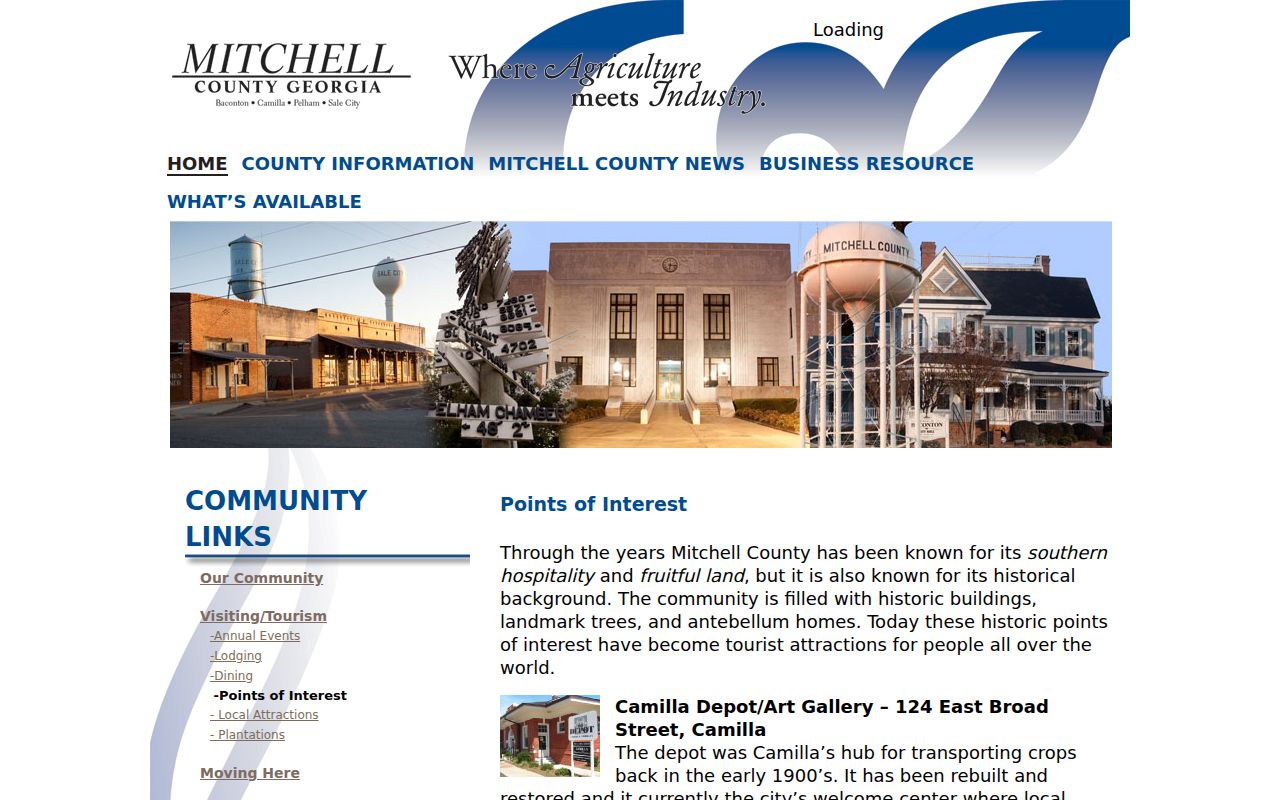
Do not assume the historic building and the clerk's current public counter share an entrance.
Mitchell Circuit Numbers Need Context
Georgia's state data office notes that courts report their own caseload numbers, and those counts never point to individual cases. Its dashboards lump together Superior, State, Magistrate, Probate, Juvenile, and Municipal courts statewide. Mitchell County has no separate set of annual filing or clearance figures of its own.
The workload figures span the whole circuit. They cover Baker, Calhoun, Decatur, Grady, and Mitchell together, not Mitchell County docket totals. Read them as workload context only. Case facts still come from the relevant docket and clerk.
The workload assessment also reports circuit averages across civil and criminal categories. Those totals cannot tell you how many cases were filed or sit pending in Mitchell County. For county-specific statistics, use the official dashboard or the export-request channel. Note the year, court level, and measure. Filing counts reveal no names and no case histories either. Those facts live in the Mitchell County court docket, not in a regional workload table.
The assigned South Georgia Judicial Circuit source identifies the five-county court system.
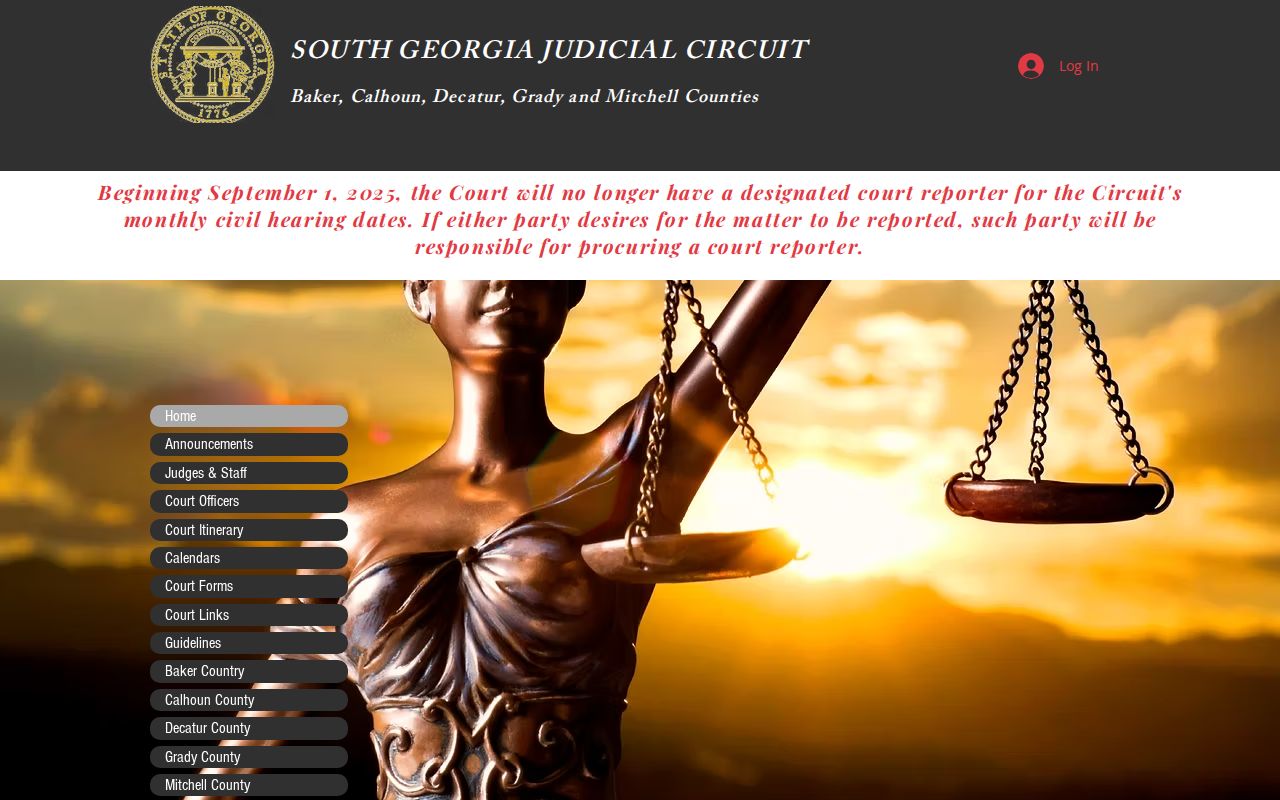
That regional structure explains why circuit calendars and judge contacts can stretch beyond Mitchell County alone.
City-by-City Court Dockets in Mitchell County
Mitchell County officially lists four incorporated cities. The 2020 Census puts Camilla at 5,187 residents, Pelham at 3,507, Baconton at 856, and Sale City at 354. Each city runs its own municipal court path, and Georgia keeps no centralized traffic-citation database.
Camilla Court Records
Municipal traffic, nontraffic summonses, and city-code cases through Camilla Municipal Court and its linked citation vendor.
Pelham Court Records
Municipal matters through the Pelham court clerk; no current public docket form was located.
Baconton Court Records
City matters begin with Baconton City Hall because no official public court-search page was found.
Sale City Court Records
Municipal ordinance and applicable state-law matters through the city court and written request channels.
Search a city citation through the issuing city, even though Mitchell State and Superior records use PeachCourt. County and circuit files stay separate from these municipal dockets.
Map and Directions to the Mitchell County Courthouse
Superior, State, and Juvenile Court files are kept with the Clerk of Superior Court, whose public counter is currently listed at 26 North Court Avenue in downtown Camilla, near the county's 1936 white-marble courthouse building on West Broad Street. Ask at this office for felony, domestic-relations, civil, and juvenile docket material; State Court records are handled through the same office.
Mitchell County Clerk of Superior Court
26 N Court Ave
Camilla, GA 31730
229-336-2021
Monday through Friday, 8:30 a.m. to 5 p.m.
The county's own clerk page and the state GSCCCA directory disagree on the counter's exact address (26 N Court Ave versus 11 W Broad St, Room 108), so calling ahead to confirm the current location is worthwhile. No parking, security-screening, or accessibility policy is published for the courthouse area.