
Mitchell County Criminal Docket Searches
Superior and State Court cases route through the Georgia Courts E-Access directory to PeachCourt. An account is required. The public gateway shows login and registration controls, but no anonymous name or case-number fields. Have the defendant name, court, and full number ready. Keep leading zeros and each year or code segment.
Online access is one channel. Tess Gay's Clerk of Superior Court office handles Superior, State, and Juvenile records. Ask at the counter, call 229-336-2021, or mail a clear request to the clerk. The county lists 26 N Court Ave, Camilla; GSCCCA lists 11 W Broad Street, Room 108, and 229-336-2022. Confirm the counter before travel. The sources do not promise fax processing or a public terminal.
- Identify the court from the charge, citation, or notice.
- Use E-Access and PeachCourt for covered Superior or State cases.
- Compare the newest event with the current circuit calendar.
- Call or visit the correct clerk if no record appears.
- Request a certified disposition separately when needed.
Mitchell Felony and Misdemeanor Courts
Mitchell County Superior Court hears felonies. State Court hears below-felony criminal matters. Magistrate Court issues warrants, hears warrant applications and some initial matters, and handles county ordinance cases. Municipal courts keep city traffic and ordinance cases. Juvenile delinquency follows a restricted path. A Magistrate warrant may later receive a different Superior Court number, so a search should not stop with the warrant identifier.
The official State Court page confirms its criminal jurisdiction.
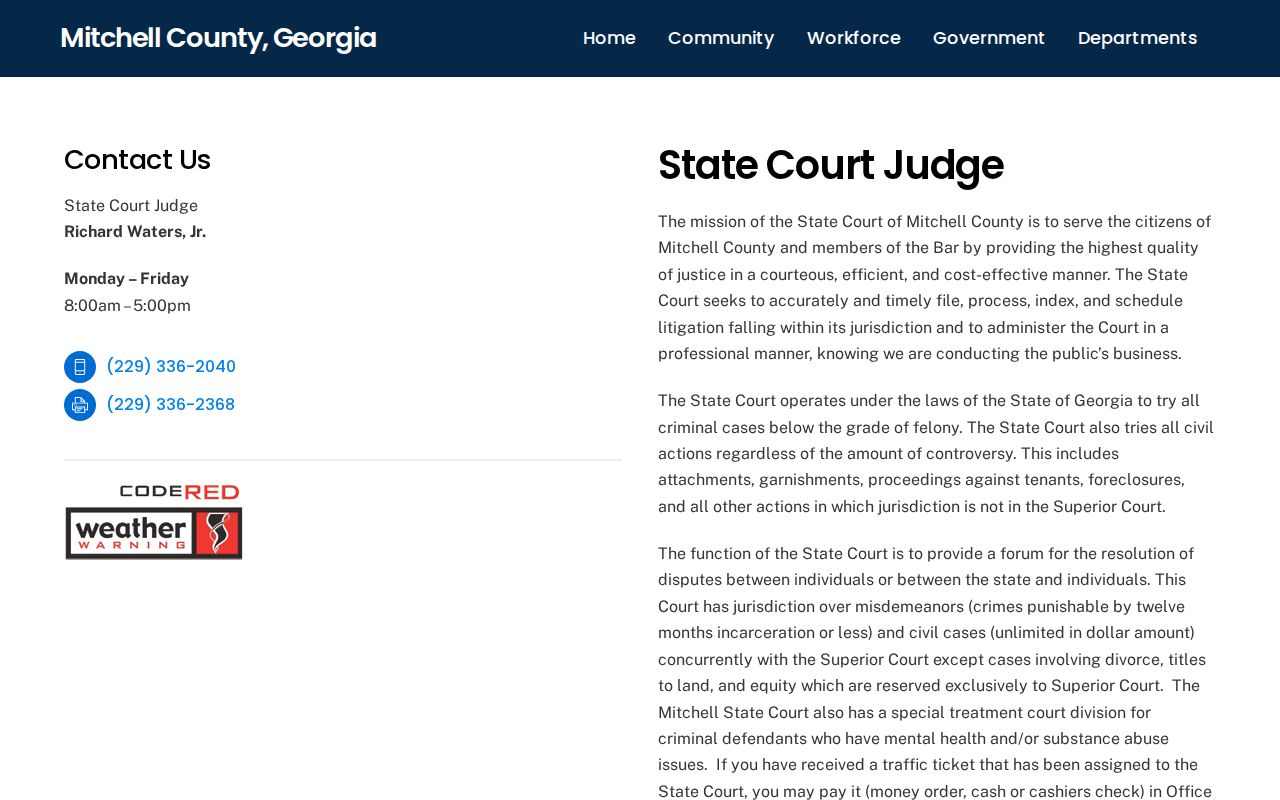
The source helps route misdemeanors away from the Superior felony docket.
Criminal Dockets: What They Show
The public General Hearing Day sheet is a calendar snapshot, not a full Mitchell County criminal docket. It displays the judge calendar, county, time, case number, case style, hearing type, attorney, walk-in note, and court-reporter field. It does not display the whole event history, charging document, bond ledger, or final disposition history. Use it to find a setting, then consult the clerk record.
| Case Number | Year, code, and number used to match the case. |
|---|---|
| Case Style | The formal caption. |
| Hearing Settings | Arraignment, pretrial, plea, trial, or revocation. |
| Attorney | Counsel listed for that event. |
| Disposition | The later judgment, dismissal, or sentence order. |
Mitchell Hearing-Day Criminal Fields
The circuit judges and staff page gives official Camilla contacts for calendar questions.
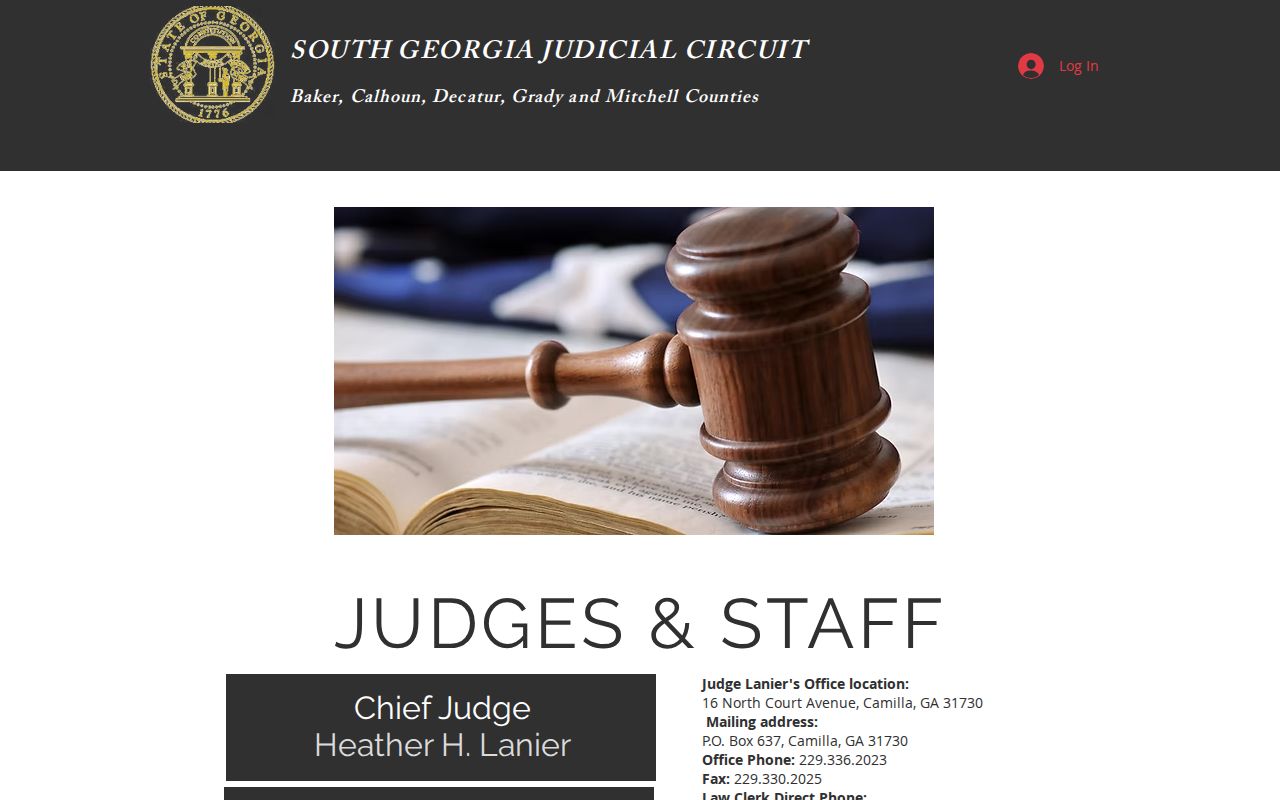
That contact route matters when a downloaded setting sheet may be old.
A continued arraignment is a moved setting, not a dismissal. Plea/sentencing names an event, not the result. Probation revocation has its own hearing label. Competency identifies the issue set for hearing. No official Mitchell abbreviation list was found, so generic code lists should not replace exact docket text.
- Arraignment
- The stage for answering a filed charge.
- Pretrial
- A preparation or motion setting.
- Disposition
- The court's recorded resolution.
Criminal Case Stages on the Docket
A felony file may begin with an indictment, special presentment, or accusation. It then records a case number and caption, arraignment or waiver, motions and pretrial settings, plea or trial, judgment, sentencing, and any appeal or post-judgment entries. Not every matter uses each step.
Docket flow: Charge Filed › Arraignment › Pretrial › Plea or Trial › Disposition › Sentencing
The circuit forms page says a waiver requires a filed charging document, Superior case number, both signatures, court approval, and filing before arraignment. Fax is not allowed.
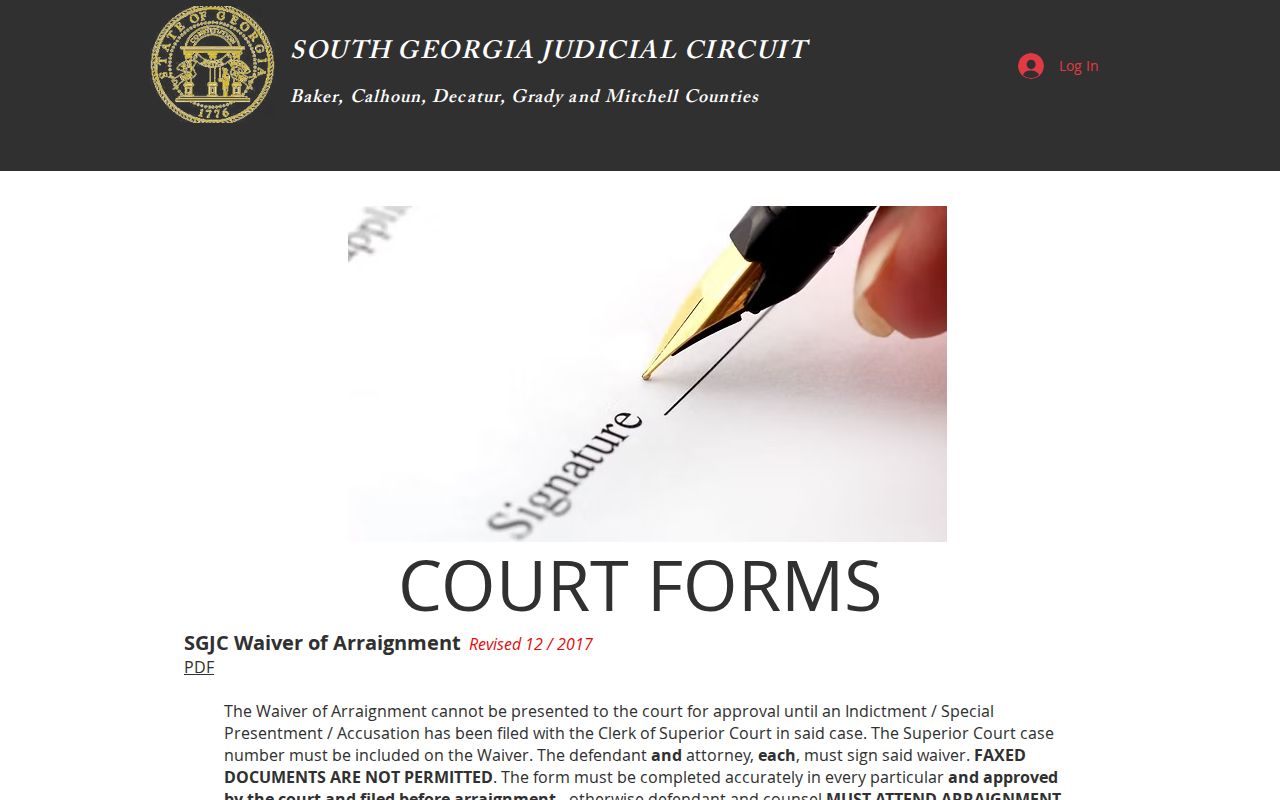
The form rules explain why an unfiled waiver is not a docket event.
Mitchell Drug Court Calendar Limits
The South Georgia Judicial Circuit Accountability and Drug Court program operates in Mitchell County. Its schedule is separate from the full criminal register. A participant's charge, plea, orders, and disposition remain in the regular court case. Search Superior or State records first, then consult program dates.
The official Drug Court page supplies the program context.
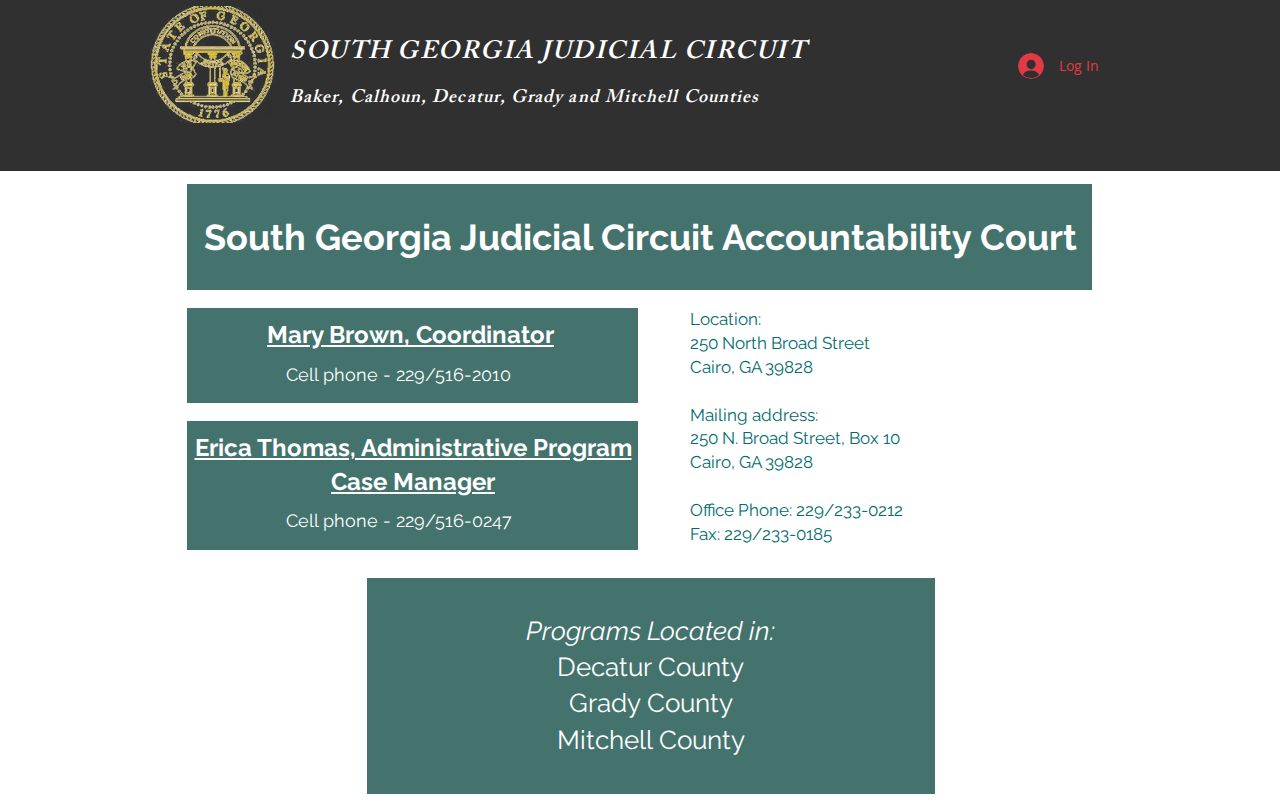
The separate view helps with program dates, while filed orders remain with the clerk.
Mitchell County Criminal Docket Courts
Tess Gay's office is central for Superior, State, and Juvenile records, but it is not clerk for every Mitchell County criminal docket. Magistrate keeps warrants and initial matters. Camilla, Pelham, Baconton, and Sale City keep municipal dockets. A request to the wrong office may yield no result even when a record exists.
Use the issuing agency and offense level. Call Magistrate at 229-336-2077 for its matters. A city citation starts with the city court. The Mitchell docket search explains case-number matching in more depth.
Missing Mitchell Criminal Case Numbers
A missing number may mean the search used a warrant number, lost a leading zero, selected the wrong court, or checked before indexing. Start with the charging notice or attorney, then ask the clerk to confirm the court and full number. Restricted access can also hide a result.
The official JDEX verification page shows that some justice data is limited to authorized users.
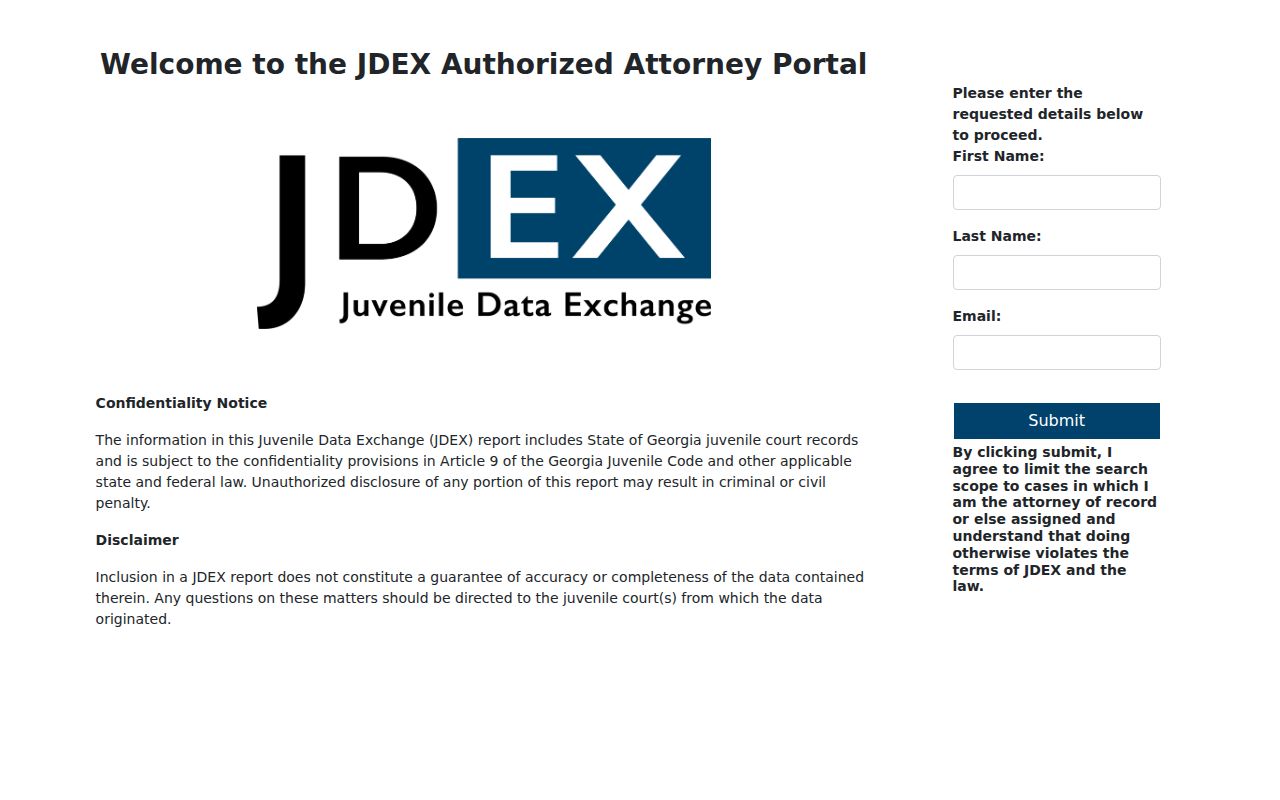
Its controls show why no public hit does not prove there is no court file.
Mitchell Juvenile Criminal Access
Juvenile delinquency does not follow the same public lookup path as an adult Mitchell County criminal docket. Tess Gay's office manages Juvenile Court records, but access remains restricted. JDEX is an authorized-user system, and its attorney verification process asks for professional information and a certification of representation. It is not a public name-search tool. A failed public search should never be used to infer that a juvenile matter does not exist.
Ask the Juvenile Court or clerk what record, notice, or hearing information may lawfully be provided to a party or authorized representative. State the relationship to the case and the item sought. Do not request an adult criminal disposition from State or Superior Court when the notice identifies Juvenile Court. The separate route protects restricted child records while preserving lawful access through the custodian.
Access Rules for Criminal Dockets
Georgia court records follow court access rules, while courts are excluded from the Georgia Open Records Act process. Send a court-file request to the court clerk. Sealed files, juvenile matters, and protected identifiers may be withheld or redacted. PeachCourt coverage also does not establish that every lower-court entry appears online.
Key Rules:
The Georgia Attorney General guidance directs court-record requests to court procedures.
Uniform Superior Court Rule 21 addresses inspection, sealing, and protected identifiers.
Ask for a plain copy when certification is not needed. For an official disposition, request a certified judgment and current fee. Mitchell State and Superior records also participate in GSCCCA eCertification, which requires an account and clerk processing.